
 Tiếng Việt


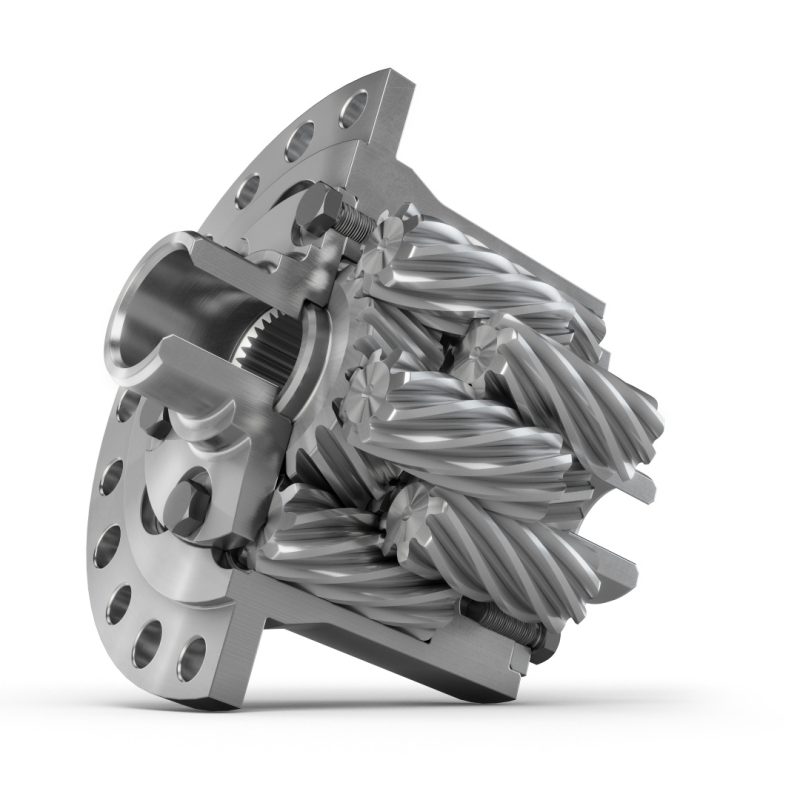
At Auto Shanghai 2025, Eaton pulled back the curtain on its new EV Truetrac® differential, tailor-made for the demanding environment of electric vehicles.
Why a Differential Designed for ICE Vehicles Isn’t Enough
Electric drivetrains pose several challenges that conventional differentials—originally built for internal combustion engines (ICE)—weren’t designed to handle:
- Shared, low-viscosity lubrication: Unlike ICEs that use heavy gear oil in differentials, EVs often share low-viscosity fluids between the motor and drive unit. Eaton addressed this by re-engineering internal gear micro-geometry to perform reliably in thinner oil environments.
- Noise sensitivity: EVs lack the masking sound of an engine, so drivetrain noise becomes far more noticeable. Eaton refined the gear design to reduce NVH (noise, vibration, harshness) and maintain a quiet driving experience.
- Instant, high torque loads: Electric motors deliver full torque immediately, placing huge demands on drivetrain components. The EV Truetrac is engineered to handle these loads while still managing traction under variable conditions.
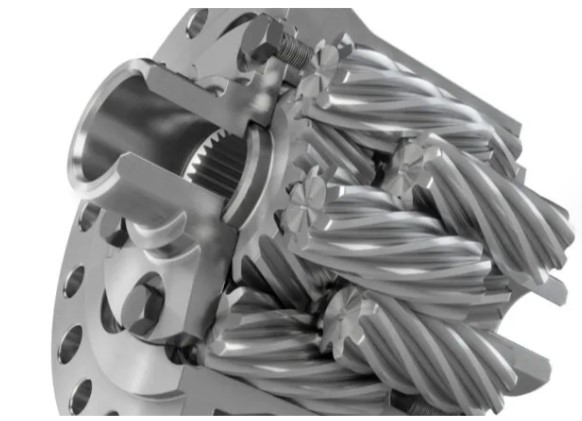
Eaton’s new Truetrac differential is designed specifically for EVs
Key Features & Benefits of the EV Truetrac
- Helical-gear limited-slip design: The Truetrac architecture is automatic, maintenance-free, and capable of biasing torque without electronic controls or friction clutch packs.
- Tunable bias ratio: It supports a bias ratio range of ~1.5–3, letting OEMs adapt performance to vehicle type (e.g. SUV, pickup, off-road).
- Compact, high power density integration: It fits into tight e-axle packaging while handling EV power densities.
- Seamless automatic response: Under normal conditions it acts as an open differential; when traction is lost, it smoothly redirects torque to the better-gripping wheel—without driver intervention.
Strategic Implications & Market Positioning
Eaton sees strong demand for automatic, mechanical limited-slip solutions (vs. fully electronic lockers) in regions like Asia and North America, especially for EVs in the pickup and SUV segments.
By offering a solution that is more “plug-and-play” and requires less calibration or software control, Eaton aims to reduce integration complexity for EV OEMs.
Sources:
https://www.electrichybridvehicletechnology.com/news/new-truetrac-differential-addresses-ev-specific-challenges.html
